Humans Meet Tech · Interview
Why Value-Based Care Depends on Accountability, Not Just Analytics
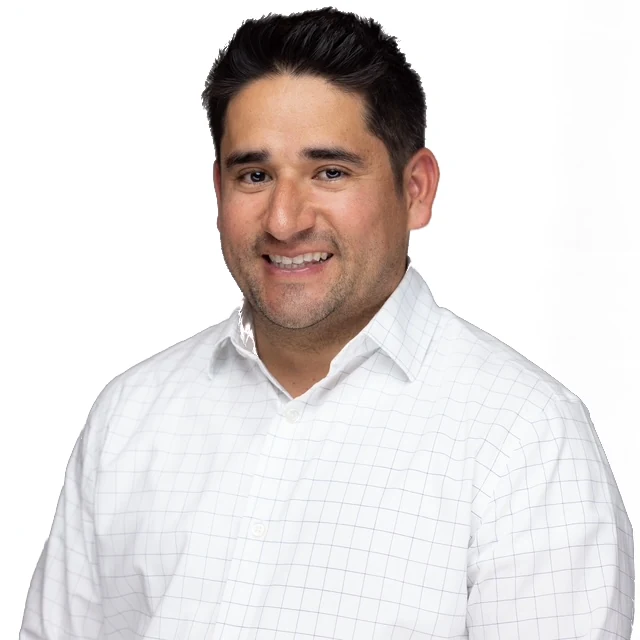
A conversation with Mike Badome, Chief Actuary at Arcadia and 2026 Emerging Leader in Healthcare, on data quality, value-based care, the missing patient voice, and why tailor-made solutioning is the next frontier.
Value-based care · Data governance · AI in healthcare
Healthcare is drowning in numbers. Claims, labs, billing records, clinical notes, all stacking up faster than anyone can use them. So you’d assume the hard part is getting the data.
It isn’t.
That’s what I took from an hour with Mike Badome, Chief Actuary at Arcadia and one of the 2026 Emerging Leaders in Healthcare. Mike has spent close to twenty years inside healthcare finance, and in that time he’s built a track record that few people in this field can match. He’s sat on every side of the table, working with payer organizations, provider systems, technology firms, and startups. Along the way, he’s advised on actuarial strategy, shaped data infrastructure, navigated value-based contracts, and evaluated AI adoption.
That cross-sector experience gives him a rare vantage point on where healthcare’s incentives align and where they break down. Most people in this industry see one or two angles. Mike has seen them all, and the pattern he keeps finding is the same regardless of which side of the table he’s on.
One conviction runs through all of it. The gap in healthcare is no longer information. It’s accountability, ownership of what happens after the information arrives. That word, ownership, ran through everything we covered. Data quality, value-based care, AI, the patient voice. Strip each one down and the same question sits underneath. Who is responsible when the decision goes wrong?
The Data Problem Is Really an Accountability Problem
Mike’s description of his daily work is deceptively simple. Collect enough high-fidelity information to produce an insight worth acting on. He’s been chasing that for two decades, and he says the field still struggles with the same basics.
“The common theme that comes up, even to this day, is collecting enough information to provide an insight that is meaningful. There is so much information being shared, but that doesn’t mean the information is high fidelity or high quality.”
A dashboard can look clean and still mislead. A model can be technically impressive and still send leaders the wrong way. His standard isn’t perfection. It’s precision about what matters. Reconcile the fields that change the decision. Leave the rest. In healthcare, the margin for bad numbers is smaller than anywhere else, because the analysis on the other end touches real people.
A really smart, highly intellectual analytics function can come up with a conclusion based on very, very poor data quality.
Clean Data Is Shared Responsibility, Not a Hero Project
Building the right foundation is slow work, and it rarely gets credit. Mike describes it as a career-long pursuit of mastering the basics, and he frames it as inherently collaborative. Both parties in any analytics engagement need to own the source data together.
“The best way to ensure that actuaries, analysts, and data scientists are providing top-of-license insight is to collaborate on the data collection, holding both parties accountable for understanding the source data, the reconciliation of that information, and how it ties to what has been reported out in the past.”
When one side holds all the knowledge about the source and the other side just consumes the output, you get asymmetry. Asymmetry is where trust breaks. “We need to hold ourselves to a higher standard so the insights we derive are meaningful and intervenable.”
A Single Source of Truth Is Forced by Humiliation, Not Strategy
Every organization has the same fight. Finance reports one number. Operations reports another. Clinical teams report a third. Each team pulls from a different system and quietly builds a private version of the truth. Most organizations discover the problem only when a high-stakes meeting reveals multiple answers to the same question.
Mike named the forcing function with a word the polished version of this story usually edits out. Humiliation.
“If you don’t have a single source of truth, it ends up becoming a humiliating circumstance. Humiliation is a forcing function that drives organizations back to the drawing board.”
Raw sources
- Claims
- Labs
- Admit and discharge data
- HIE feeds
Run the joins and the actuarial screening once
A curated data mart that everyone draws from
Cloud infrastructure helped by freeing up informatics teams to automate checks and balances rather than firefighting. But the structural move the strongest organizations make is simpler. They take raw sources (claims, labs, admit and discharge data, HIE feeds), run the joins and the actuarial screening once, and publish a curated data mart that everyone draws from. A single source of truth is not a technical asset. It’s an operating model.
The best companies today are creating the canvas for you to pull from, so everyone goes back to the same well instead of running their own joins in different languages.
What Value-Based Care Actually Means
Value-based care has cycled through at least three definitions in a decade. Mike saw “VBC 3.0” on a conference slide recently and thinks the evolution is healthy. Strip away the policy language and the idea is straightforward.
“What we’re really trying to do, in essence, is bring more accountability to the cost related to outcomes. We want an infrastructure in the United States based on accountability, not the number of visits, the number of labs, the number of hospitalizations.”
How do you make that stick? You attach it to something the other side actually values. Mike reached for his own house to make it concrete. His two young kids don’t respond to money, so dollars aren’t the lever. Screen time is. Do the work first, then earn the screen. Same mechanism, different currency.
Value-based care applies the same principle to healthcare. Deliver high quality care and a real patient experience, and you get rewarded for it. The goal isn’t to strip dollars from the system. It’s to make sure the money flows toward behavior that creates genuine value.
The Patient Is Missing from the Room
This is where Mike’s conviction came through most clearly. Most value-based arrangements are negotiated between payers, providers, vendors, and technology firms. The patient, the only person whose life is directly at stake, isn’t at that table. The irony is that value-based care is built around patient outcomes, yet patients themselves often have little influence over how success is defined. Mike says he’ll advocate for changing this for as long as he can.
“Within value-based care today, the construct is payer and provider. The patient is nowhere to be found in that engagement. When we start to represent the patient cohort in a more foundational fashion, your revenue-focused stakeholders are going to understand that the patient now has a voice in the room, and you want to convince them that your products, your services, your care patterns are valuable.”
But Mike doesn’t let patients off the hook either. His offer is conditional. A voice in the room in exchange for owning your side of the care plan. Following through on the recommendation. Taking the advice from the clinician you say you trust. He lives this himself. An engaged clinician who responds through an app made him more willing to take a hard recommendation seriously. Last year, someone he trusted gave him a real lifestyle change to make. He’s held it for nearly a year.
Give patients a real voice and the entire dynamic shifts. The CFO argument might even take care of itself, because the case becomes harder to dismiss when the person receiving care is in the room.
Harvey Eisen
Everything abstract in this conversation became real when Mike talked about his grandfather. It was the clearest reminder that healthcare metrics ultimately represent human experiences.
A personal story
Harvey Eisen lived to 104. Near the end of his life, his health deteriorated quickly. Repeated falls. A string of post-acute stays. Difficult decisions about what kind of intervention still made sense. A conversation about palliative care opened a different path.
“When he had a conversation with palliative care, it really created an environment for him and his family where we saw that the falls were more painful than what he could be experiencing towards the end of life.”
Instead of continuing through surgeries and interventions that no longer fit, Harvey was able to spend his final weeks differently. With dignity, on his own terms. Mike doesn’t oversell it. “That’s just two weeks in one person’s life. There’s much more upstream.”
A fall rate is not a metric. A hospitalization is not a cost event. A discharge is not the end of a workflow. Each one is a moment in somebody’s life, and data earns its keep only when it helps create the right moment at the right time.
Scaling Care Is an Operational Problem, Not a Knowledge Problem
Ask Mike what blocks this kind of care from becoming the norm and he doesn’t reach for pessimism. The blocker isn’t knowledge. It’s operational weight.
Identifying one frail elderly patient sounds trivial. At scale it means aggregating claims, admit records, and HIE feeds, flagging the right candidate, reaching out, securing consent, scheduling, and finally delivering the care.
Identifying one frail elderly patient, at scale
- 1Aggregate claims, admit records, and HIE feeds
- 2Flag the right candidate
- 3Reach out
- 4Secure consent
- 5Schedule
- 6Deliver the care
Knowing what should happen is the easy half. Building the system that makes it happen reliably, for thousands of patients, is the hard half. Technology only earns its place if it removes friction rather than adding another layer of complexity.
Maybe AI can give you a tailor-made insight quicker, but you still have to be the person who believes in, validates, and reconciles it. You can’t just submit an insight because your bot told you.
Where AI Fits, and Where It Doesn’t
Mike’s position on AI is clear. Healthy skepticism is warranted, and he includes himself in that. “I myself don’t quite trust it yet. We need to get there.”
His path is to start small. Assign it trivial tasks first. Confirm it gets the basics right. Build confidence gradually, almost like training it for the specific use case before expanding the scope. He’s also careful about the category error of treating all AI as equivalent. Some of the most valuable tools are narrow. Take AI scribing. Reduce the documentation burden and clinicians get more time at the bedside. That’s where adoption accelerates, because the value is visible and trust gets built in the open.
He was candid about what AI means for his own profession. Asked whether a credentialed actuary eventually gets replaced, he said probably yes, just not soon. “A gift and a curse in the same breath.” His clearest point was about judgment. AI can produce an insight faster. It cannot own the insight.
From Broad Insight to Tailor-Made Solution
Too much of what gets presented in healthcare is still generic. A 33 percent reduction in ED visits. A 10 percent drop in hospitalizations. None of it tells anyone what to do on Monday.
“It’s always ‘a 33% reduction in ED visits if you work with me.’ That’s great. But how? How, specifically, for this organization?”
The fix is to keep asking why, one layer at a time. Hospitalizations are high. Is it a provider issue, a geographic one, an access gap, a chronic condition pattern? Once the driver is clear, go further. Find a practice elsewhere with a near-identical profile that already solved it and share the playbook. His frustration with the generic version is open and earned. We’ve been saying “lower hospitalizations” for decades. The real question is which ones, for whom, and who has already figured it out.
It’s like drugs designed for your genome. Very specific to the problem. Get out of these generalities we’ve been repeating for decades.
Accountability Belongs to Everyone
His one takeaway, the word he kept returning to across the entire conversation, was accountability. He wants more of it from clinicians, hospitals, executives, and payers. He wants it from patients too. And he frames it not as a burden but as something worth taking pride in.
Accountability. I want to see more clinicians, practices, hospitals accountable. But I also want to see patients more accountable. When you are given a recommendation from a clinician that you trust, it’s now on you to follow through.
You can’t be the person that complains about rate increases if you’re the same person that does nothing when it comes to managing your health. Accountability can be scary. But we should be prideful in it, not scared of it.
He closed without claiming to have all the answers. “We’re all still learning. I don’t have the silver bullet here, but I think focusing on the right things and being accountable to that will take us a long way.”
Most discussions about healthcare technology lean on tools, dashboards, and infrastructure. All of it matters. Under all of it, the work is still human. Someone reads the numbers, decides whether to believe them, and acts. The data was never the hard part. Accountability for what we do with it is.
About the guest
Mike Badome
Chief Actuary · Arcadia · 2026 Emerging Leader in Healthcare
Nearly 20 years of experience across payers, providers, technology firms, and startups. Mike brings a uniquely cross-sector lens to healthcare finance, actuarial science, and value-based care strategy.
Mike Badome spoke with Mariam Ammar on Humans Meet Tech, a podcast about technology and the people who have to make it work.
Join the conversation
When two teams bring different numbers to the same meeting, who in your organization owns the answer?
Loading comments…