Turning a Fragmented Member Journey Into Improved Retention
Helped a nearly 3,000-member wellness organization turn fragmented member data, manual workflows, and disconnected systems into one connected strategy for retention, operations, technology, and growth ahead of a second-location launch.
The Challenge
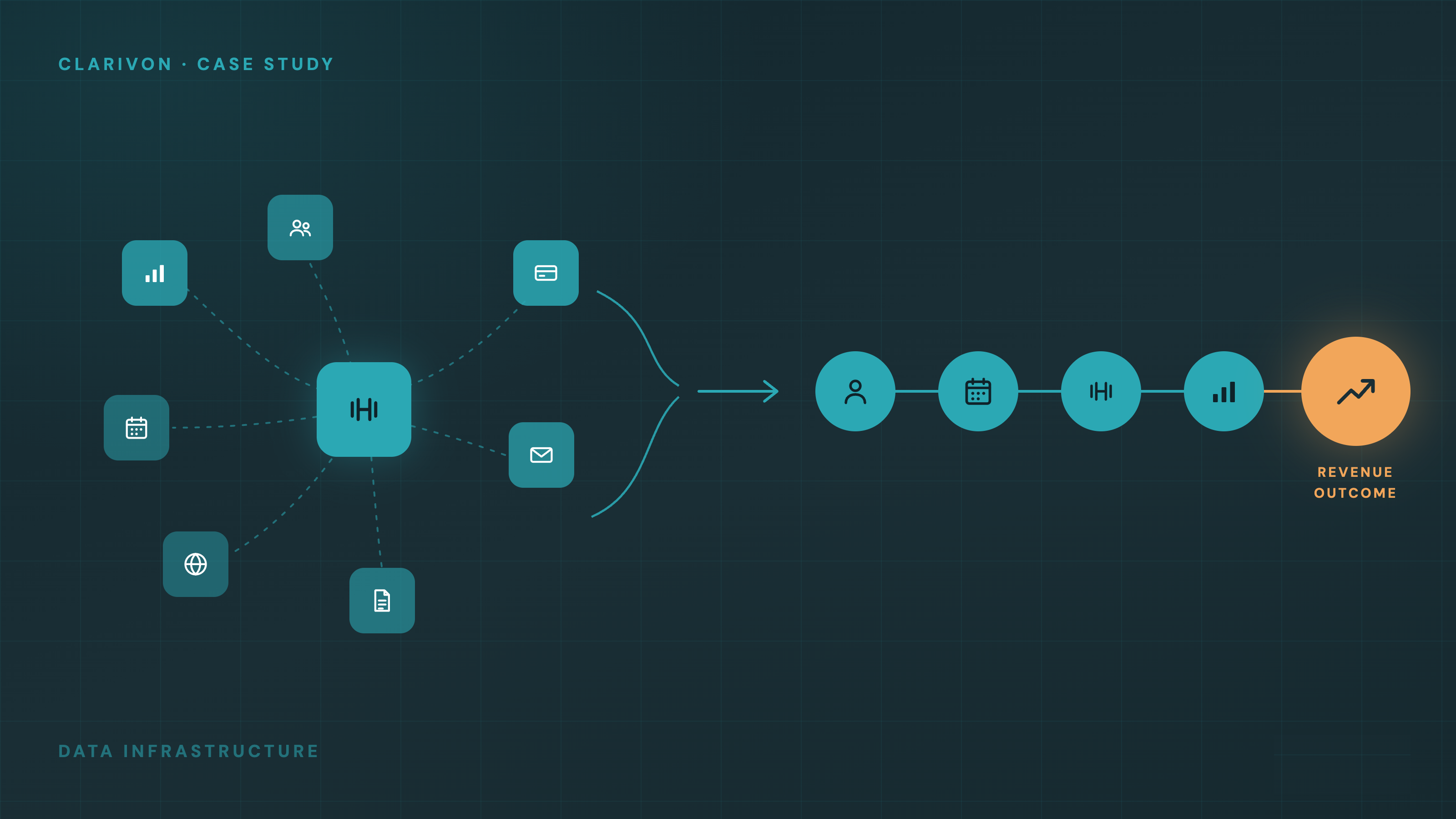
The organization was growing, but its systems and processes had not evolved at the same pace. Membership, contracts, attendance, acquisition, referrals, and cancellations were spread across different systems and workflows. Leadership had plenty of data, but no reliable view of the full member journey from first interaction through renewal and eventual exit. At the same time, front desk staff were handling repetitive administrative work that pulled time away from members, and a second location was approaching launch. The organization needed more than a dashboard. It needed to know where members were falling through the cracks, which operational issues mattered most, what could be automated, and what should be fixed before scaling to another location.
Our Approach
Clarivon approached the engagement holistically, looking across people, process, data, technology, member experience, and growth rather than treating retention as an isolated analytics problem. We rebuilt the member journey from acquisition through membership, engagement, renewal, and attrition, then connected the findings to concrete operational decisions. The work included: • Reconstructing the full member journey across acquisition, trials, memberships, attendance, renewals, and exits • Creating consistent definitions for membership, tenure, renewal, and retention • Building cohort analysis to identify exactly when attrition accelerated • Connecting early attendance behavior to longer term retention • Identifying members showing immediate signs of churn risk • Separating preventable attrition from natural departures • Quantifying the highest value retention and conversion opportunities • Reviewing staff workflows for opportunities to reduce repetitive manual work • Helping leadership navigate technology and vendor options based on business need rather than adding tools for their own sake • Identifying opportunities to automate routine communications and administrative tasks, giving front desk staff more time to focus on members • Building a prioritized roadmap that accounted for the upcoming second location, so existing problems would not simply be replicated as the organization grew The result was one connected strategy across retention, operations, data, technology, and expansion.
The Result
What we found: • 40% of members were gone by the first renewal. Only 60.1% of the 2025 cohort remained by month 14, making the first year the clearest point for proactive retention efforts. • 338 high-risk members could be acted on immediately, representing $22,220 in monthly billing. This gave the team a defined population for outreach before those members cancelled. • Early engagement nearly doubled retention. Members with the lowest visit frequency during their first 90 days had a 46.1% retention rate at month 14, compared with 82.1% among the most engaged members, turning attendance into an early warning signal the organization could actually use. • Roughly $300K in annual opportunity was prioritized across four measurable retention and conversion gaps, letting leadership prioritize by impact rather than intuition. • 10 concrete actions replaced a long list of findings, prioritized across retention outreach, data capture, trial conversion, attendance engagement, reporting, and future analysis. The organization left Phase 1 with more than an analysis. It had a clear member journey, a measurable retention baseline, an identified at-risk population, quantified business opportunities, recommendations for reducing manual work, guidance for technology and vendor decisions, and a phased roadmap for improving operations before opening its second location. The work also changed how the organization thought about its problems. Retention was no longer something measured after a member left; attendance became an early signal, technology decisions were tied to actual operational needs, automation was evaluated by how much staff capacity it could return, and the second location became an opportunity to build better processes from the beginning rather than duplicate existing friction. Clarivon turned fragmented data into a practical operating strategy designed to improve retention, give staff time back, and support the next stage of growth.